Q25 / 160 · AP EAMCET 2020 (18 Sep Shift 2) · Chemistry
Rate of the reaction, \(x A+y B \longrightarrow z C\) is given by \(r=k[A]^x[B]^y\). If the concentration of \(A\) is tripled, rate of reaction increased by 27 times over the initial. Then choose the correct plot for variation of half-life \(\left(t_{1 / 2}\right.\) on \(y\)-axis) of the reaction w.r.t. total initial concentration of reactants (on \(x\)-axis) is
- Correct answerA
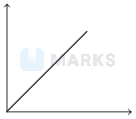
- B
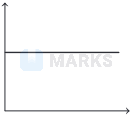
- C
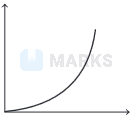
- D
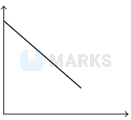
Solution
In this question, we have to assume that order of the reaction, \(x A+y B \rightarrow z C\) with respect to \(B\) is zero, i.e., \(y=0\).
So, the rate expression becomes,
\(r=k[A]^x[B]^y=k[A]^x[B]^0=k[A]^x\)
Now, according to question
If the concentration of \(A\) is tripled, rate of reaction increased by 27 times over the initial hence.
According to available data,
\(\begin{aligned}
& (27 r)=k[3 A]^x \\
& \frac{27 r}{r}=\frac{k[3 A]^x}{k[A]^x} \text { or } 27=(3)^3 \text { or }(3)^3=(3)^x
\end{aligned}\)
\(x=3\) and this order of reaction \(=3\)
Now, for a third order reaction half-life will be
\(t_{1 / 2}=\frac{3}{2 k_3 a_0^2} \text { or } t_{1 / 2} \propto \frac{1}{a_0^2}\)
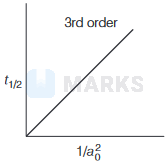
Hence, the correct answer is option: 'A'.