Q16 / 75 · JEE Main 2026 (05 April Shift 2) · Chemistry
Given below are two statements:
Statement-I: The condensation reaction between $CH_3-CH=O$ and 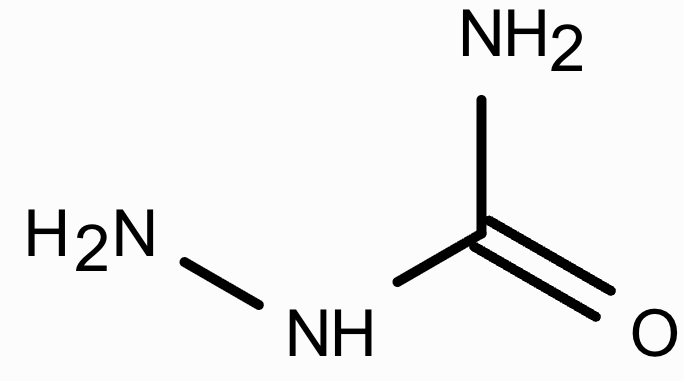 under optimum pH will produce
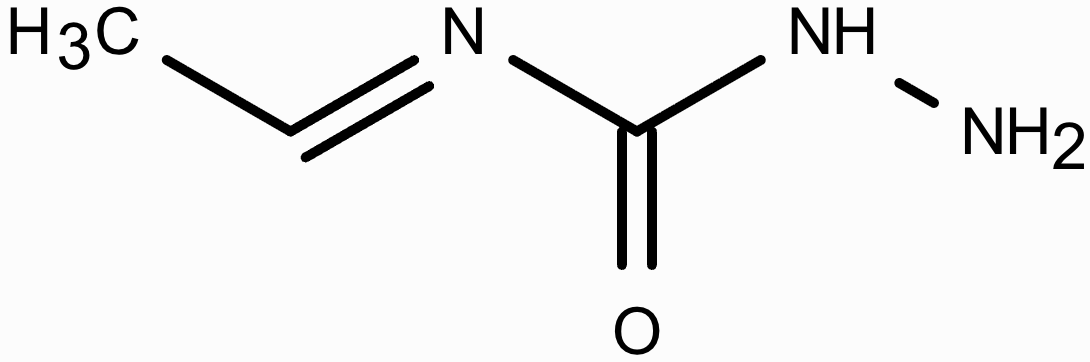 .
Statement-II: The molecule 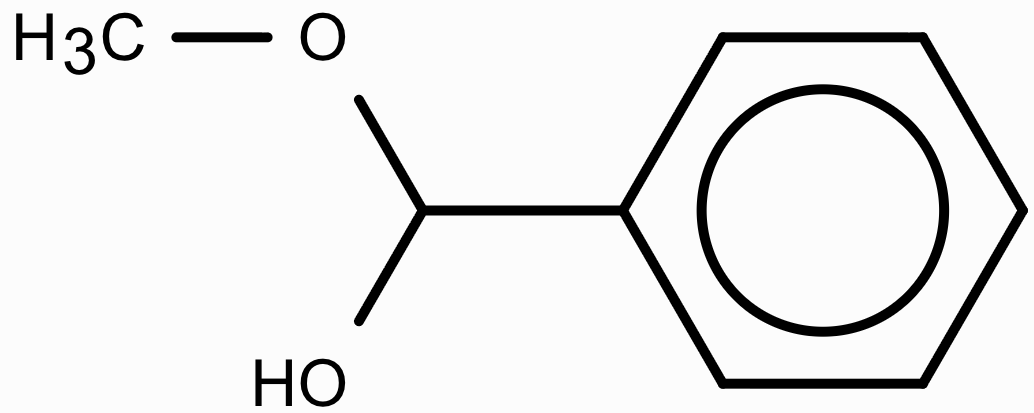 will generate $Ph-CH=O$ in the presence of dilute acid.
In the light of the above statements, choose the correct answer from the options given below:
Statement-I: The condensation reaction between $CH_3-CH=O$ and
under optimum pH will produce .Statement-II: The molecule
will generate $Ph-CH=O$ in the presence of dilute acid.In the light of the above statements, choose the correct answer from the options given below:
- ABoth Statement I and Statement II are true
- BBoth Statement I and Statement II are false
- CStatement I is true but Statement II is false
- Correct answerDStatement I is false but Statement II is true
Solution
In Statement-I, evaluating the structure of semicarbazide ($\text{H}_2\text{N}-\text{NH}-\text{C}(=\text{O})-\text{NH}_2$), the lone pair of electrons on the $-\text{NH}_2$ group directly attached to the carbonyl carbon is delocalized due to resonance. The terminal $-\text{NH}_2$ group of the hydrazine part is not involved in resonance with the carbonyl group, making it significantly more nucleophilic.
Therefore, the condensation reaction of acetaldehyde with semicarbazide under optimum pH occurs at the terminal $-\text{NH}_2$ group to yield acetaldehyde semicarbazone:
$\text{CH}_3\text{CH}=\text{O} + \text{H}_2\text{N}-\text{NH}-\text{C}(=\text{O})-\text{NH}_2 \rightarrow \text{CH}_3\text{CH}=\text{N}-\text{NH}-\text{C}(=\text{O})-\text{NH}_2 + \text{H}_2\text{O}$
The product provided in Statement-I indicates an attack by the less nucleophilic amide nitrogen to form $\text{CH}_3\text{CH}=\text{N}-\text{C}(=\text{O})-\text{NH}-\text{NH}_2$, which is incorrect. Thus, Statement-I is false.
In Statement-II, the given molecule $\text{Ph}-\text{CH}(\text{OH})(\text{OCH}_3)$ is a hemiacetal. Hemiacetals are unstable in the presence of dilute aqueous acid and undergo rapid hydrolysis to regenerate the corresponding carbonyl compound and alcohol.
$\text{Ph}-\text{CH}(\text{OH})(\text{OCH}_3) \xrightarrow{\text{dil. H}^+} \text{Ph}-\text{CH}=\text{O} + \text{CH}_3\text{OH}$
This hydrolysis reaction successfully generates benzaldehyde ($\text{Ph}-\text{CH}=\text{O}$). Thus, Statement-II is true.
We conclude that Statement-I is false but Statement-II is true.
Hence, the correct answer is option: 'D'.