Q4 / 75 · JEE Main 2026 (24 January Shift 2) · Chemistry
Given below are two statements:
Statement I: The dipole moment of R-CN is greater than R-NC and R-NC can undergo hydrolysis under acidic medium to produce
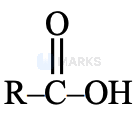 .
Statement II: R-CN hydrolyses under acidic medium to produce a compound which on treatment with $\mathrm{SOCl}_{2}$, followed by the addition of $\mathrm{NH}_{3}$ gives another compound $(\mathrm{x})$. This compound $(\mathrm{x})$ on treatment with $\mathrm{NaOCl} / \mathrm{NaOH}$ gives a product, that on treatment with $\mathrm{CHCl}_{3} / \mathrm{KOH} / \Delta$ produces R-NC.
In the light of the above statements, choose the correct answer from the options given below
Statement I: The dipole moment of R-CN is greater than R-NC and R-NC can undergo hydrolysis under acidic medium to produce
. Statement II: R-CN hydrolyses under acidic medium to produce a compound which on treatment with $\mathrm{SOCl}_{2}$, followed by the addition of $\mathrm{NH}_{3}$ gives another compound $(\mathrm{x})$. This compound $(\mathrm{x})$ on treatment with $\mathrm{NaOCl} / \mathrm{NaOH}$ gives a product, that on treatment with $\mathrm{CHCl}_{3} / \mathrm{KOH} / \Delta$ produces R-NC.
In the light of the above statements, choose the correct answer from the options given below
- ABoth Statement I and Statement II are false
- Correct answerBStatement I is false but Statement II is true
- CBoth Statement I and Statement II are true
- DStatement I is true but Statement II is false
Solution
Statement I: The dipole moment of alkyl cyanides ($R-CN$) is indeed greater than alkyl isocyanides ($R-NC$) because the $C \equiv N$ bond is more polar than the $N^+ \equiv C^-$ bond where formal charges oppose the electronegativity difference. However, the acidic hydrolysis of $R-NC$ produces a primary amine ($R-NH_2$) and formic acid ($HCOOH$), not a carboxylic acid ($R-COOH$). Thus, Statement I is false.
Statement II: $R-CN$ on acidic hydrolysis gives $R-COOH$. Treatment with $SOCl_2$ gives $R-COCl$. Addition of $NH_3$ gives $R-CONH_2$ (compound x). Treatment of $R-CONH_2$ with $NaOCl/NaOH$ (Hofmann Bromamide Degradation equivalent) gives $R-NH_2$. $R-NH_2$ on treatment with $CHCl_3/KOH/\Delta$ (Carbylamine reaction) produces $R-NC$. Thus, Statement II is true.
Therefore, Statement I is false but Statement II is true.
Hence, the correct answer is option: 'B'.