Q35 / 51 · JEE Advanced 2023 (Paper 1) · Physics
A slide with a frictionless curved surface, which becomes horizontal at its lower end, is fixed on the terrace of a building of height from the ground, as shown in the figure. A spherical ball of mass is released on the slide from rest at a height from the top of the terrace. The ball leaves the slide with a velocity and falls on the ground at a distance from the building making an angle with the horizontal. It bounces off with a velocity and reaches a maximum height . The acceleration due to gravity is and the coefficient of restitution of the ground is . Which of the following statement(s) is(are) correct?
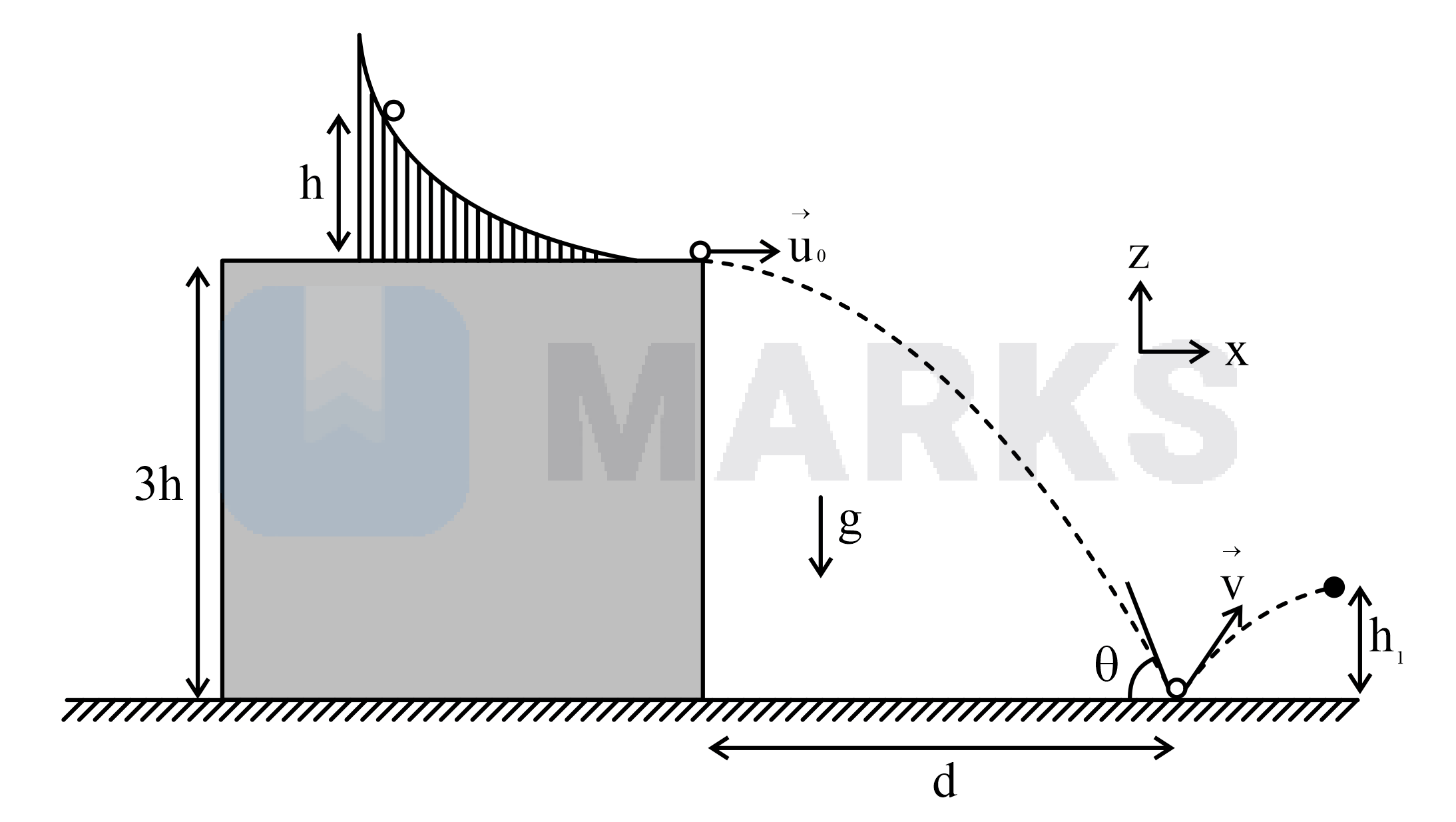
A slide with a frictionless curved surface, which becomes horizontal at its lower end, is fixed on the terrace of a building of height from the ground, as shown in the figure. A spherical ball of mass is released on the slide from rest at a height from the top of the terrace. The ball leaves the slide with a velocity and falls on the ground at a distance from the building making an angle with the horizontal. It bounces off with a velocity and reaches a maximum height . The acceleration due to gravity is and the coefficient of restitution of the ground is . Which of the following statement(s) is(are) correct?
- Correct answerA
- B
- Correct answerC
- Correct answerD
Solution
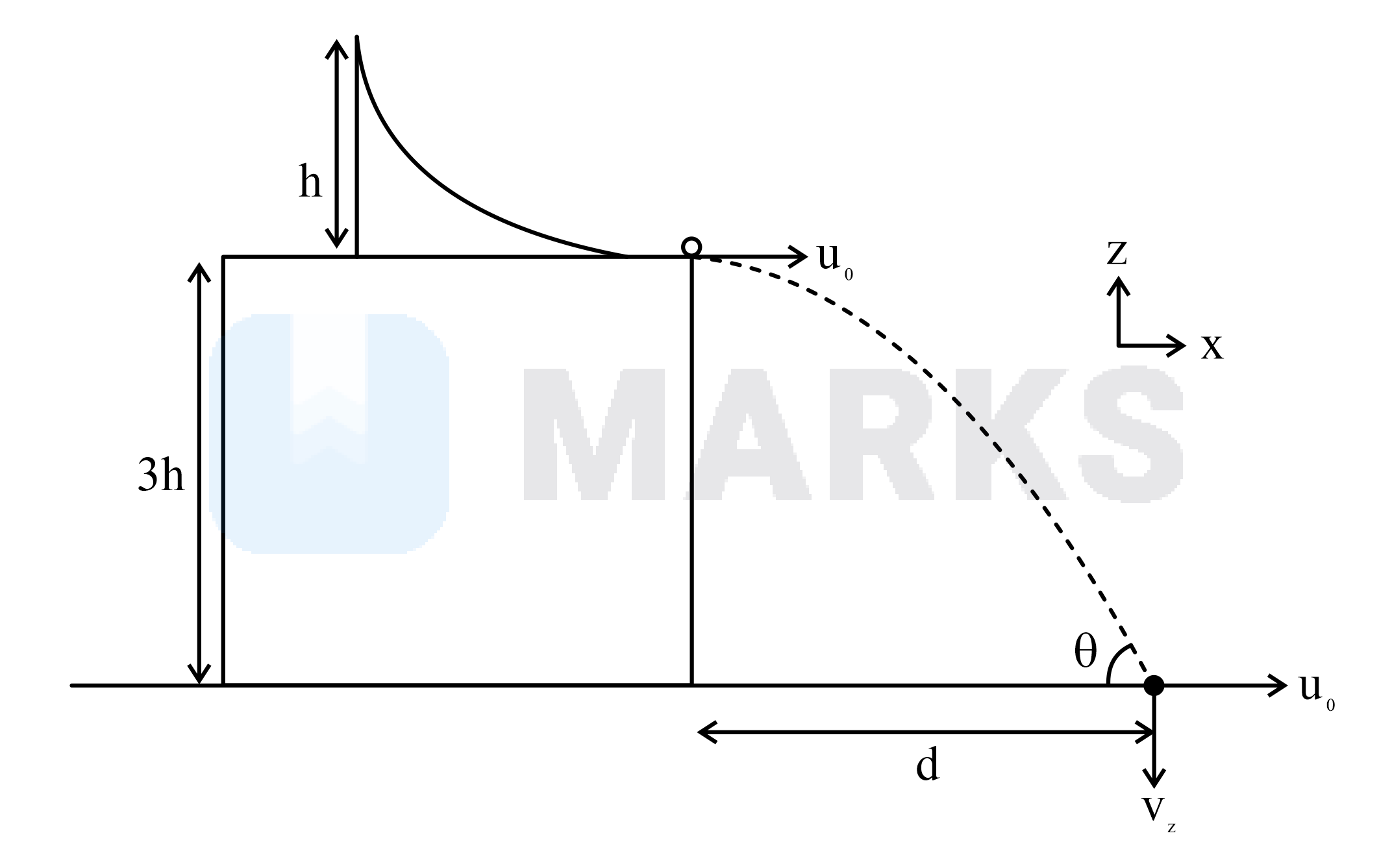
Using energy conservation,
is the horizontal component of the velocity throughout the flight. For vertical component of the velocity(just before collision with the ground), we can use equation of motion
Angle can be written as,
Horizontal distance covered just before the collision will be,
After collision, only velocity along -direction changes. Therefore,
and hence
Now, maximum height achieved after collision will be,
.
Finally, .
Hence, the correct answer is options: 'A', 'C', 'D'.